Rifugio Tuckett e Sella: the most astonishing mountain hut in the Alps (to me)
I'm not biased. I only worked there for two months and I'm friends with the managers. An honest guide to one of the last real huts in the Brenta Dolomites.
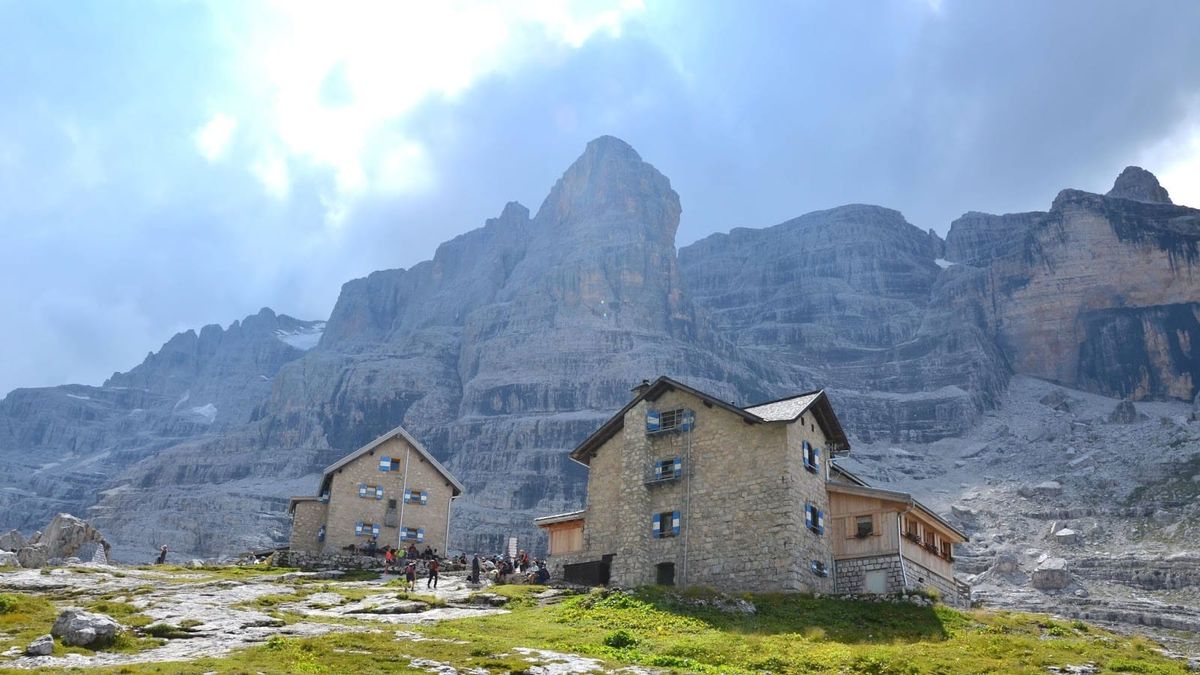
Joking aside: if you're looking for a real experience, you'll find it here. And the way I see it, real experiences are getting rare.
First, what is a rifugio?
If you've never stayed in one: a rifugio is an Italian mountain hut. It's not a hotel, and it's not trying to be one. You reach it on foot, you sleep in shared rooms or dorms, you eat what the kitchen makes, and dinner is early. In exchange you get to wake up at 2,272 metres (7,454 ft), in the middle of the Brenta Dolomites. Most people think that's a fair deal.
Two tips before you go
- By all means come for lunch, but at weekends it gets busy. Sometimes too busy. On a weekday you'll enjoy it far more.
- Be smart, though: stay the night. In for a penny, in for a pound. At lunch you get maybe 20% of what this hut has to offer. That 20% is still incredible, but you miss a lot. A real lot. Let me explain why.
Where it is
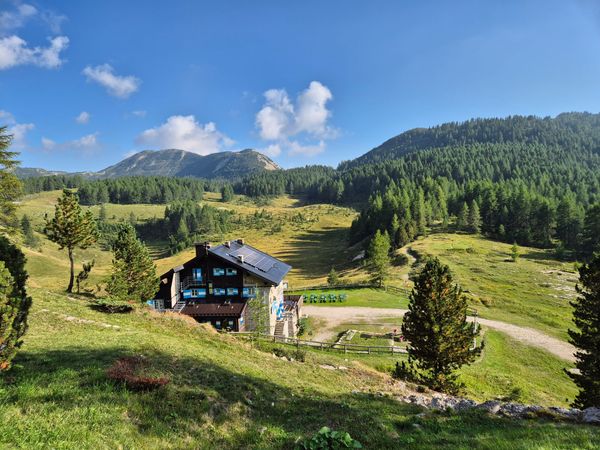
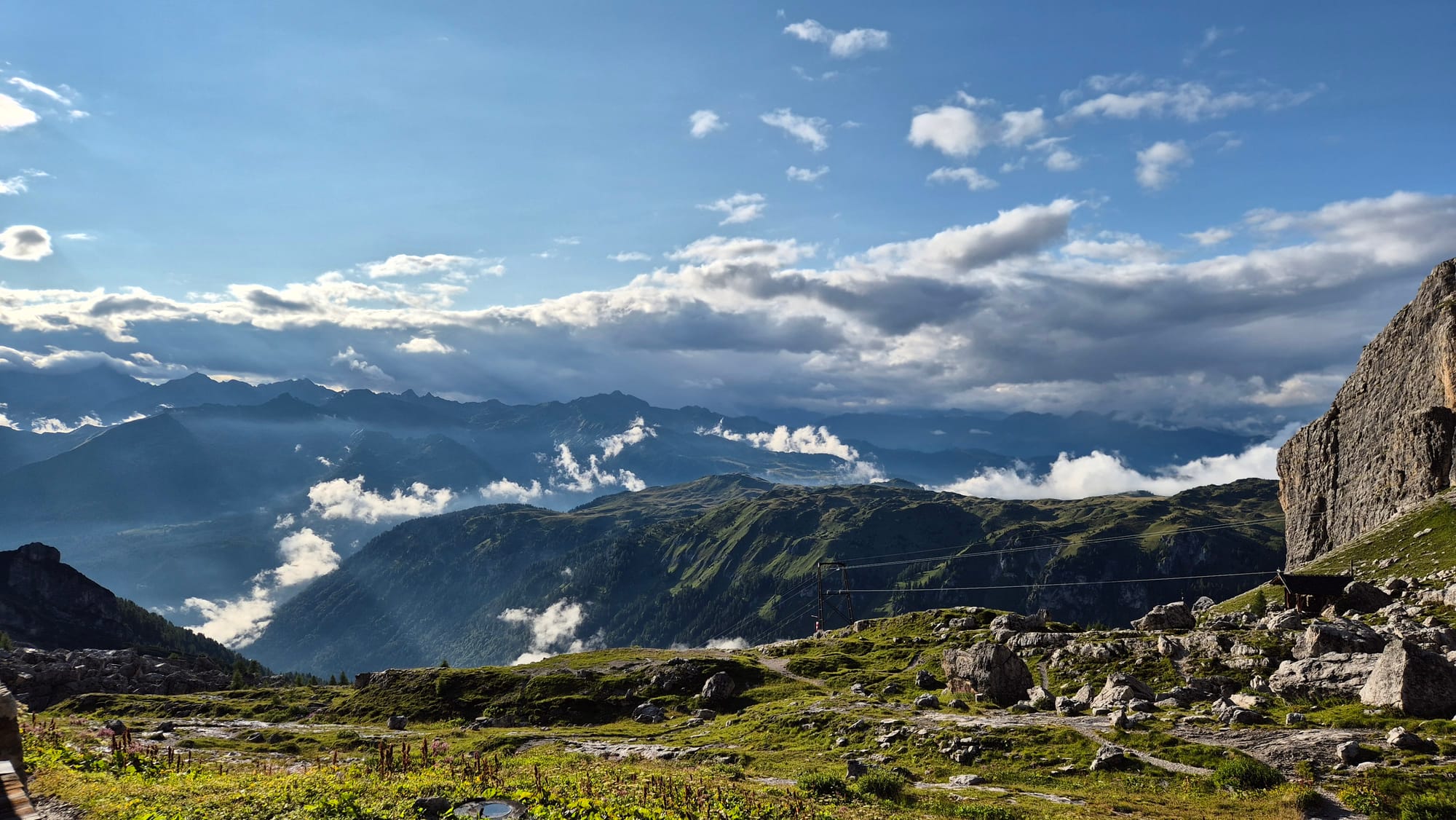
Rifugio Tuckett e Sella sits at 2,272 metres, right in the heart of the Brenta Dolomites in Trentino, northern Italy, above the resort of Madonna di Campiglio. The Dolomites are a UNESCO World Heritage Site, and the Brenta group is one of their most spectacular corners. The hut is the starting point for some of the most famous trails and via ferratas in the whole range.
Basically, it's one of the most beautiful huts in the Dolomites. Which, logically, makes it one of the most beautiful in the Alps. Which, logically, makes it one of the most beautiful in the world.
The food is heavenly, the managers know what they're doing, it's still a proper hut, it has a great history, and you meet people who are at an interesting point in their lives. What more could you want?
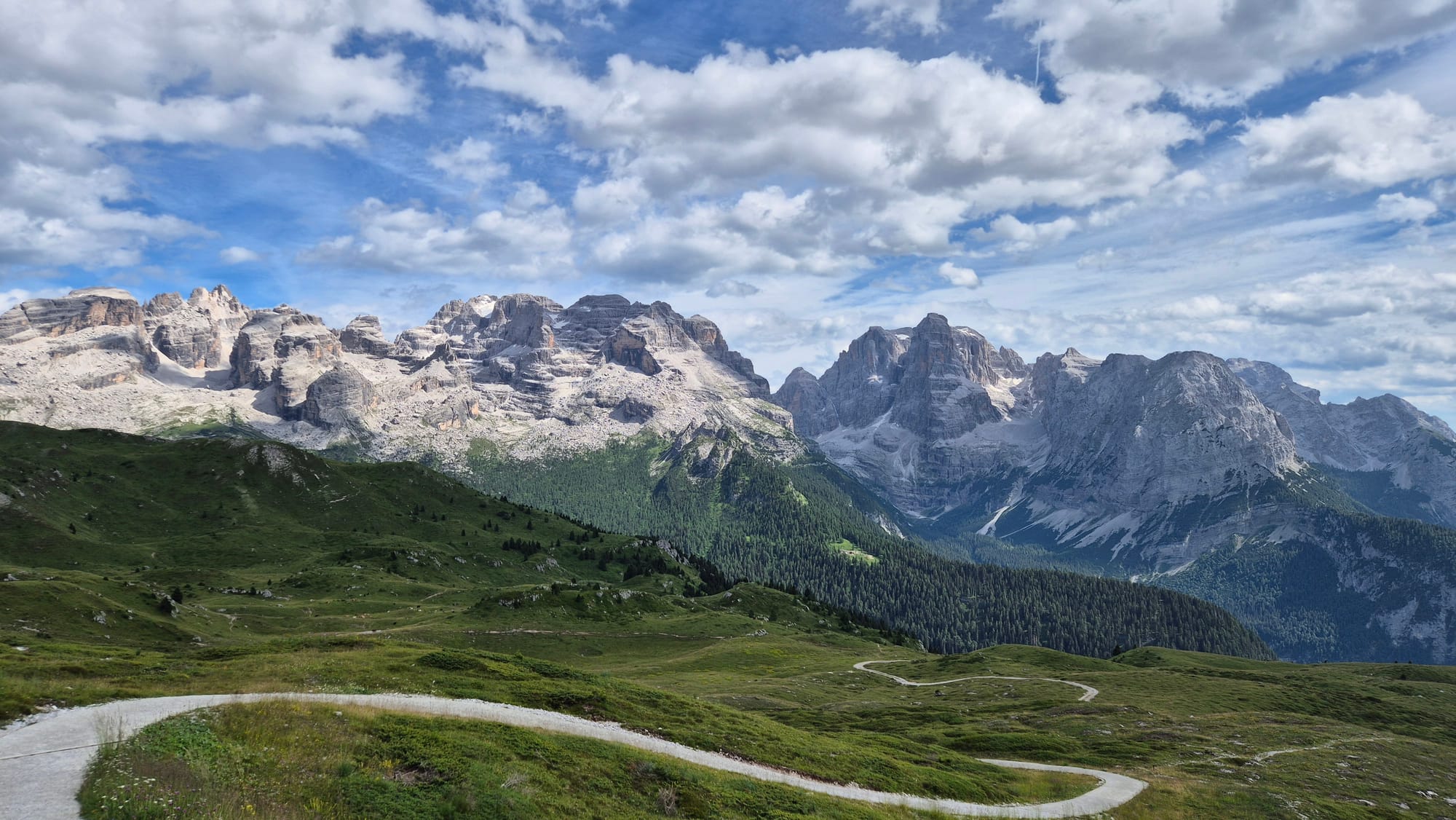
The routes
Score: 9/10. Pretty much everything Instagrammable in the Brenta starts from here.
Ever heard of the Bocchette Alte via ferrata? No? Open Instagram, and if the algorithm has you down as a mountain person, it'll show you that route in one post out of five. It starts right here, and it's one of the most beautiful routes in the world, with jaw-dropping views.
A quick word if via ferratas are new to you: they're climbing routes fitted with steel cables, ladders and rungs, and you clip yourself in as you go. You need experience and the right kit (helmet, harness and a via ferrata lanyard set). If you don't have the experience, hire a local mountain guide. And before you set off, ask at the hut about current conditions: early in the season there can still be snow on the ledges.
There's more. If you're staying the night, the Tuckett is the perfect base for heading to Rifugio Brentei, with the Crozzon di Brenta towering over it. Or you can head towards the Brentei and Alimonta huts along the SOSAT path, a protected route of ledges and metal ladders. For me it's the perfect first via ferrata, as long as you do it with someone who knows the ropes.
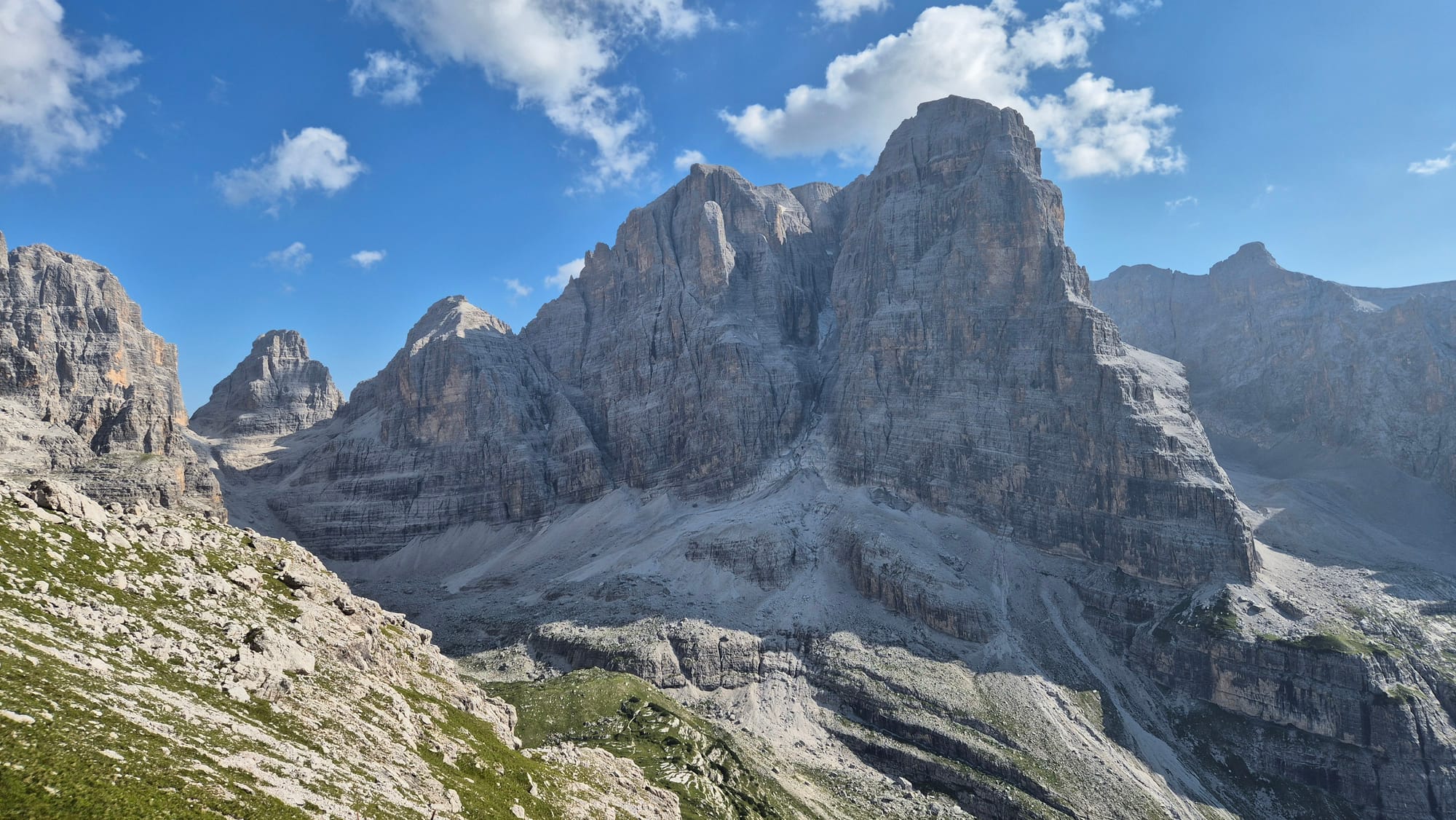
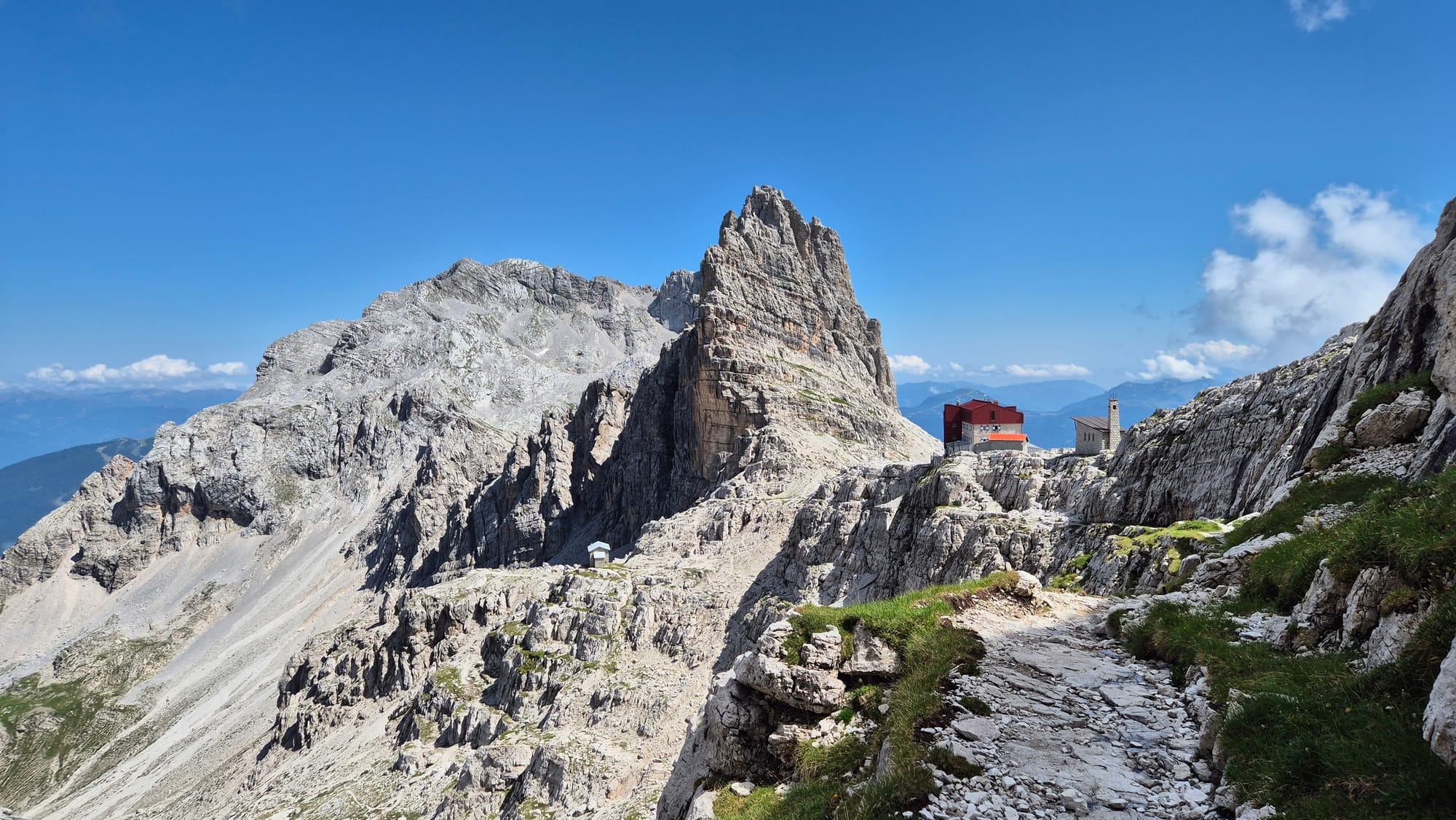
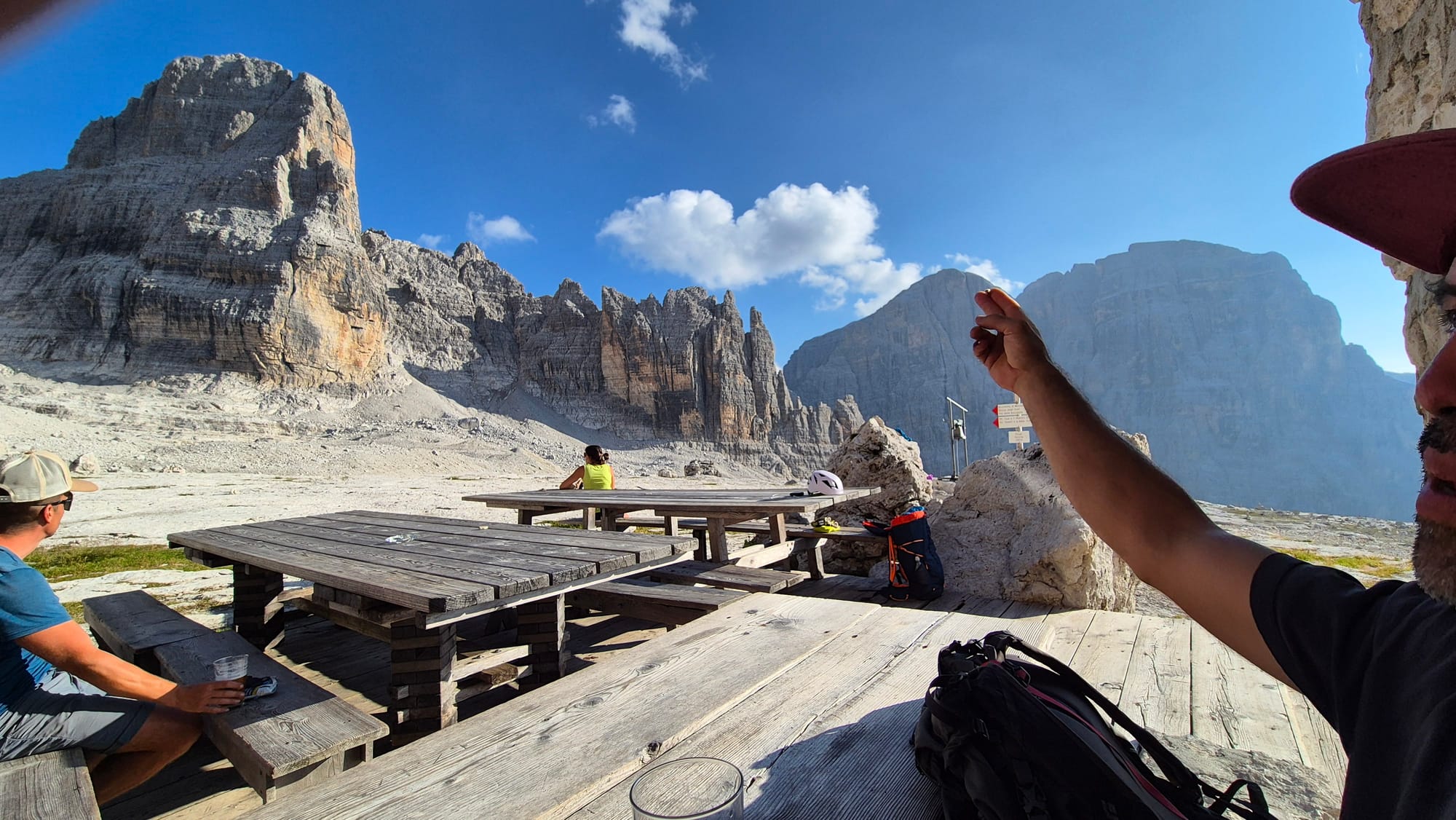
- Dedicated Instagrammer? This is the right place to start.
- Serious mountaineer? Same answer: you have to do this at least once in your life.
- Short on time, not much mountain experience, and you don't want to end up somewhere that's pretty but ultimately nothing special? You can't go wrong here.
The Brenta hut-to-hut
You can also treat the Tuckett as one stage of a longer, multi-day loop around the Brenta Dolomites. Nearby you'll find the Graffer, Brentei, Alimonta and Tosa Pedrotti huts. That's also where you'll find another great classic, the Bocchette Centrali.
I've seen hordes of New Zealanders, Americans, Dutch and just about everyone else spend days walking through this enchanted landscape. And on that loop, the Tuckett is an essential stop. And an unforgettable one.
Getting there
Score: 7/10. Even people who really shouldn't be able to get there manage to get there.
Getting to Madonna di Campiglio
The nearest airports are Verona, Bergamo and Milan. By car, count on roughly two and a half to three hours. By public transport, take the train to Trento and then bus B201 to Madonna di Campiglio. In summer there are also seasonal coaches from the Milan area. The Campiglio Dolomiti tourist site has the current timetables.
From Madonna di Campiglio there are two ways up to the hut.
From Vallesinella: the right way
From the Vallesinella car park (1,513 m / 4,964 ft), follow SAT trail 317, with about 760 metres (roughly 2,500 ft) of ascent. Some people take two hours; I take an hour and a half. It's a lovely walk, first through the woods and then among the huge boulders left by old rockfalls. If you don't mind a small detour, you can also pass the Vallesinella waterfalls, which are well worth it. Except when you find elderly ladies bathing in them, perhaps convinced the water will make them younger. I couldn't tell you.
Practical note: in summer, access to Vallesinella is restricted. The car park has to be booked online, and at certain times of day the only way up is the shuttle bus from Madonna di Campiglio. The rules change every year, so check the summer mobility page before you go.
From Passo del Grostè: the simple way"
Take the Grostè cable car from Campo Carlo Magno up to the pass (2,442 m / 8,012 ft), then follow SAT trail 316. But it's the coward's choice.
It takes me an hour. Be warned, though: some people take two and a half hours and still complain that there are too many rocks. If you're in the second group, this kind of mountain might not be for you.
And then maybe you call a helicopter to get back down, spending a thousand euros, in the brand-new flannel shirt you bought in Milan, without half an hour of training in your legs. Well done!
The trail is easy, but it's still a high-altitude path over rocks: proper hiking boots, not trainers.
The food
Score: 9/10. This is where they really shine, somewhere between tradition and something for everyone.
Considering this is a real mountain hut and not a restaurant or a hotel down in the valley, the cooking is among the best you'll find. If you book half board (dinner, bed and breakfast), which is good value, you get a dinner where you choose from nine dishes.
If you want the local stuff, there's polenta with cheese and meat. The tagliatelle with venison ragù are well worth it too. And the goulash with bread and the canederli (Trentino bread dumplings): spicy and spectacular.
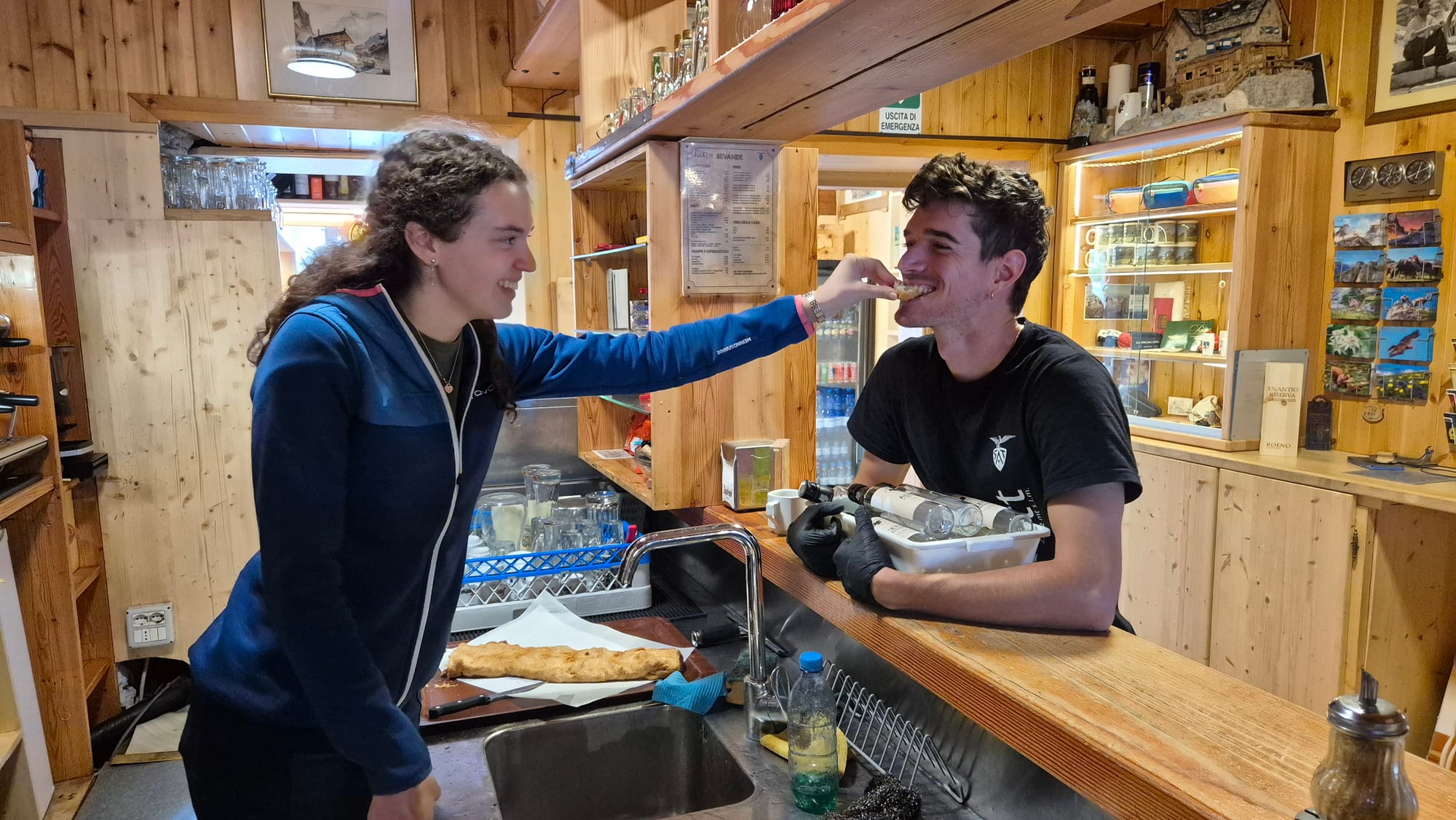
If you're feeling more burger than polenta, or you've got kids in tow, they'll happily serve you a cheeseburger and chips. Some purists will turn their noses up, but the kids are always grateful. And the portions are huge.
Prices are hut prices, so a bit higher than in town. But remember everything has to be brought up from the valley. And I can say this because I worked there: the kitchen really, really cares.
The building
Score: 9/10. A real hut, a real place, no frills.
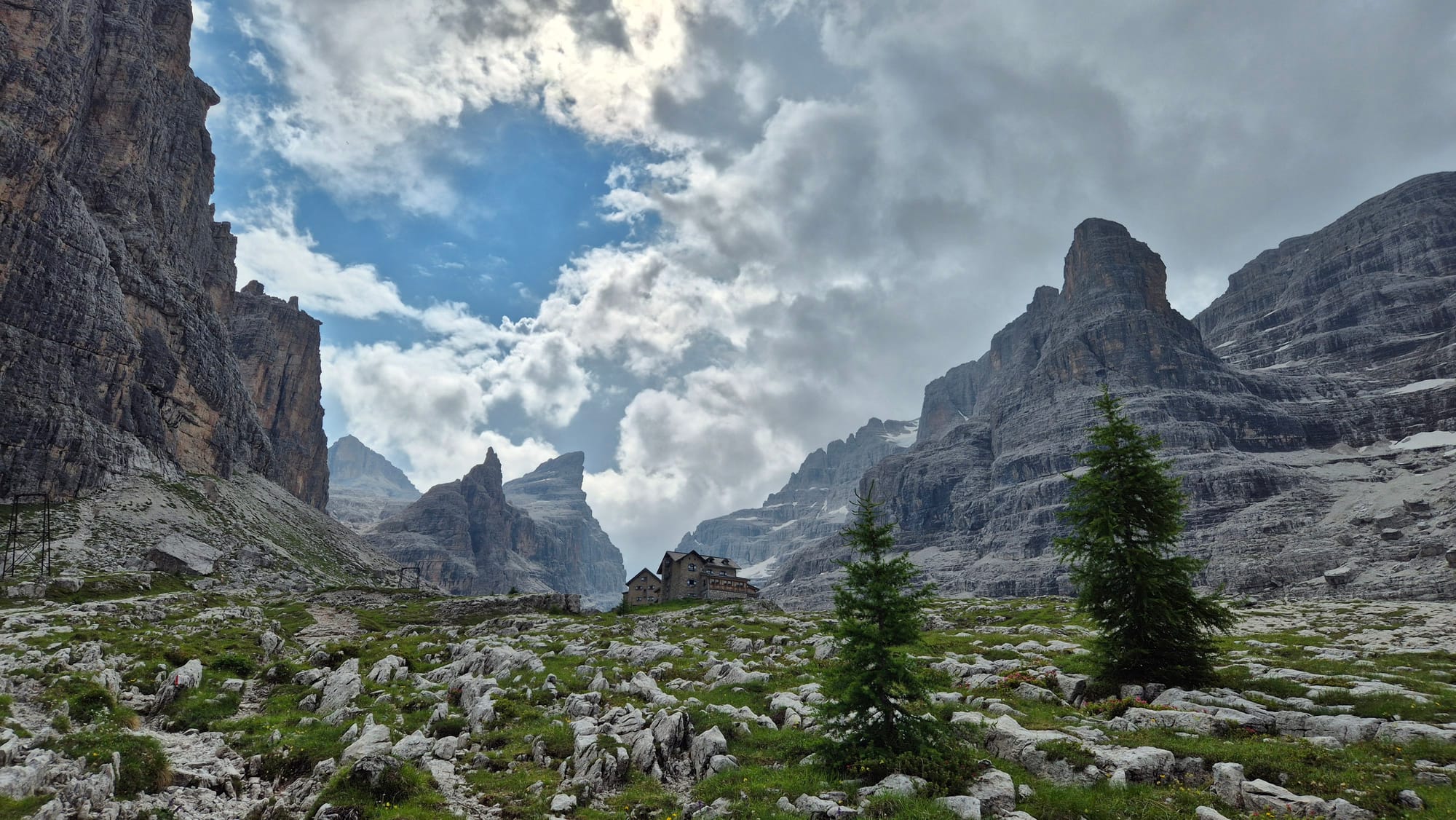
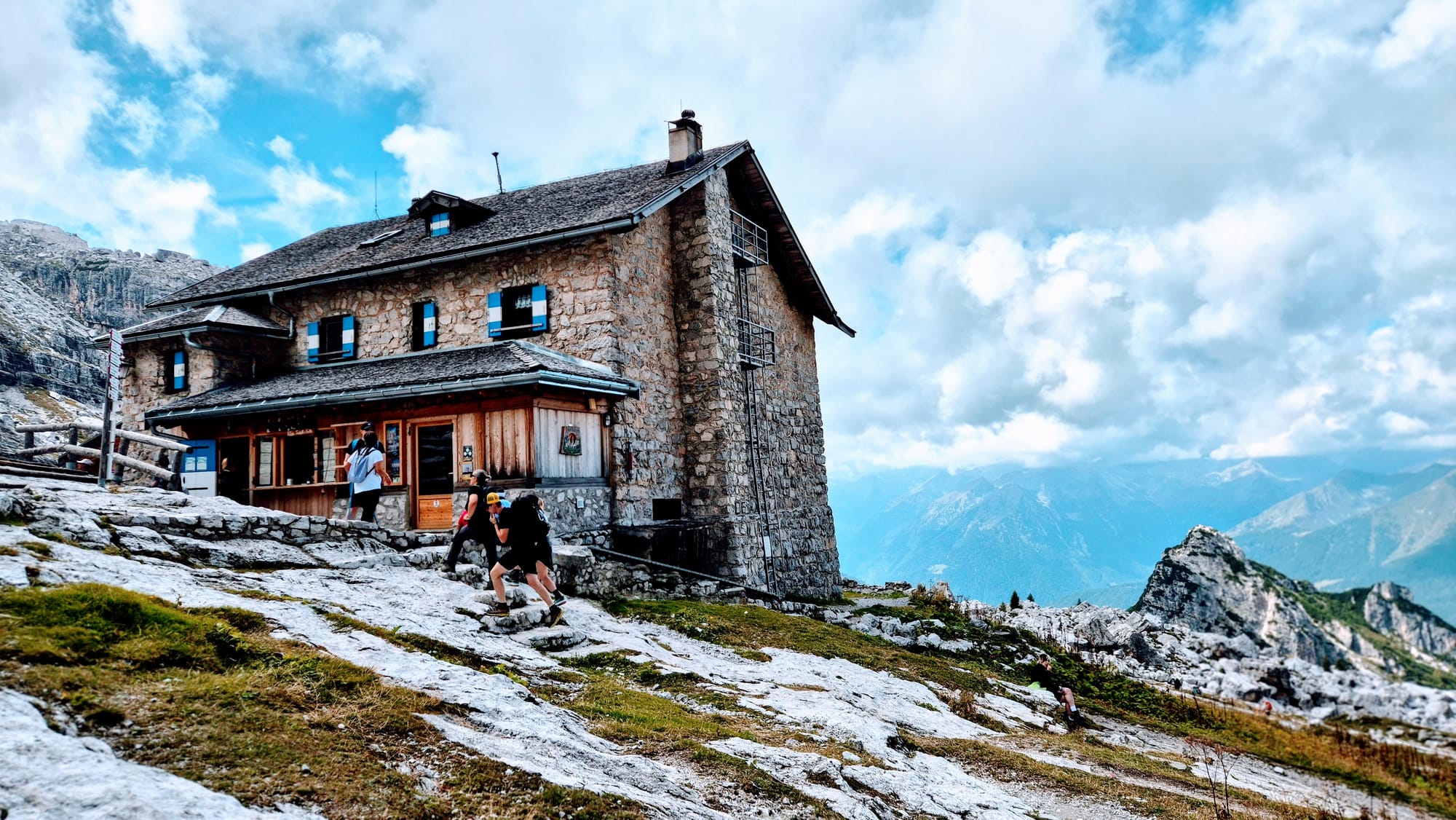
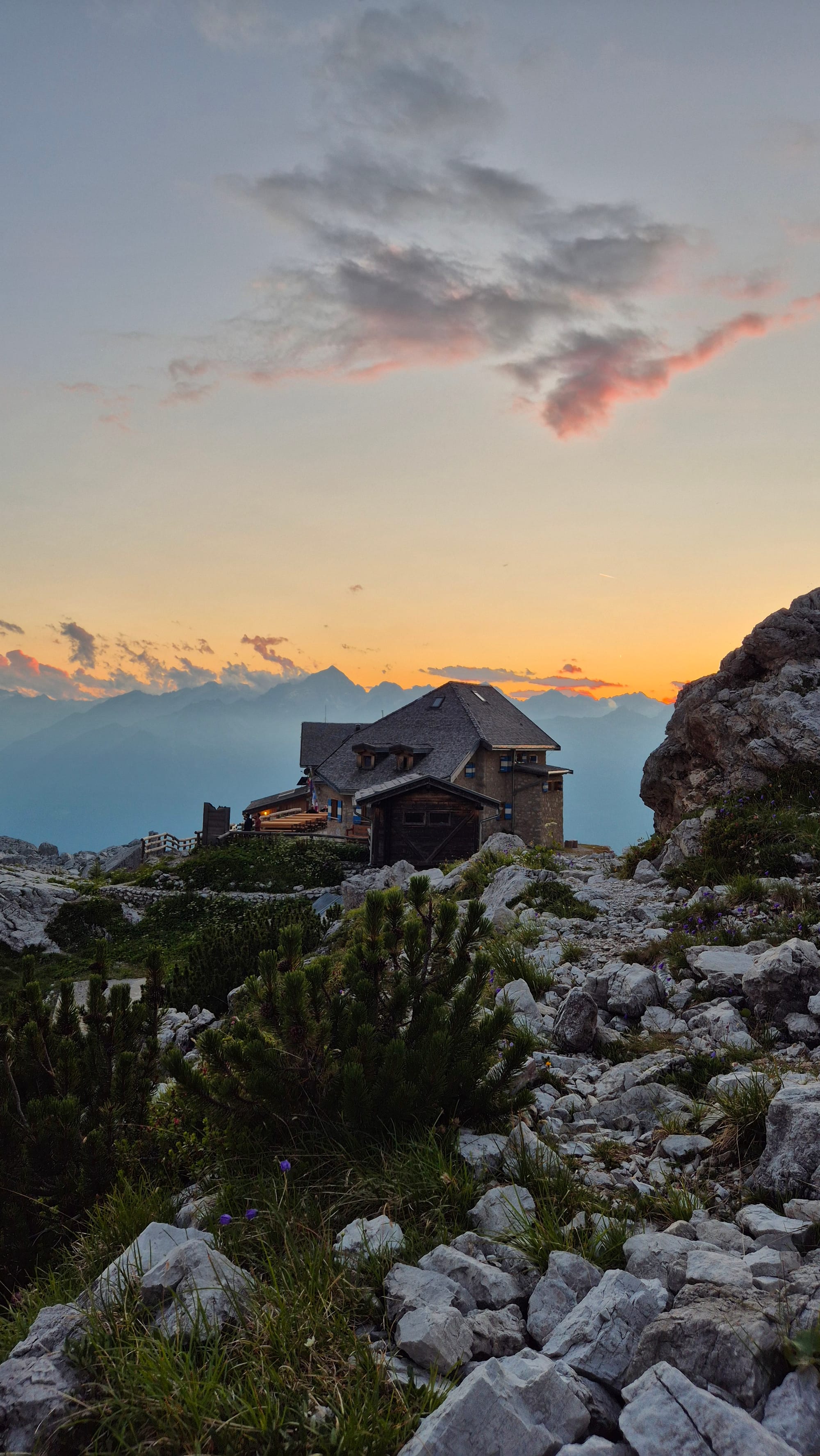
The hut is actually two buildings. I'm not joking. At the start of the twentieth century, Italians and Germans were each out to prove who was best. On one side, SAT, the Trentino alpine club, built Rifugio Quintino Sella, named after the founder of the Italian Alpine Club. A stone's throw away, the Berlin section of the German and Austrian Alpine Club built the Tuckett-Hütte, named after the English climber Francis Fox Tuckett.
Yes, English. One of your lot got his name on one of the finest huts in the Dolomites.
The Italians finished first and opened a week earlier, in August 1906. But the German building is better made. A draw. Then the First World War left both in a sorry state, and in 1920 SAT restored the pair of them. Match over.
You sleep in shared rooms or dorms, at modest, regulated prices. If you want a private room with an en-suite, you've picked the wrong experience. And the wrong place. The Tuckett is a real hut: count yourself lucky if you find a free socket to charge your phone.
What to pack if you're staying
- A sleeping bag liner: that's how you sleep in a hut.
- A head torch: for the bathroom at night and for stepping outside to look at the stars.
- Earplugs: in a dorm there's always someone snoring. Always.
- A warm layer: at 2,272 metres it's cold in the evening, even in August.
- A power bank: see above, sockets are a rare commodity.
- Some cash: handy to have as a backup this high up.
Book well ahead, especially at weekends and in August, when half of Italy is on holiday.
A few hut manners
- Boots come off at the entrance.
- Dinner is at a set time. Be there.
- If you've booked and can't make it, call and cancel. Beds are precious up here.
- It's a mountain hut, not a party hostel: people get up early, so keep the noise down at night.
The views
Score: 9/10. In the evening they're incredible. It only misses out on a 10 because I can't give 10 to everything.
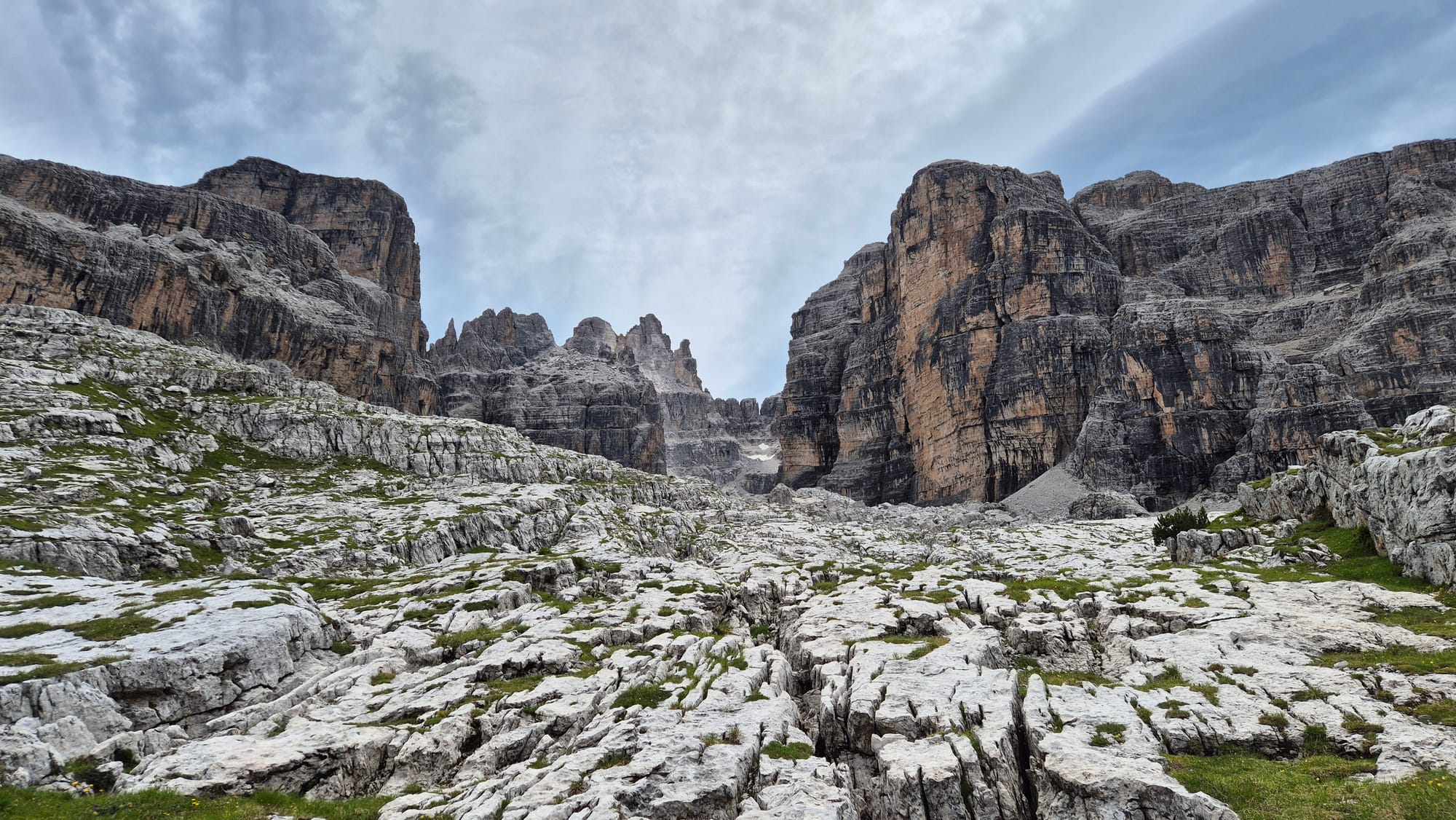
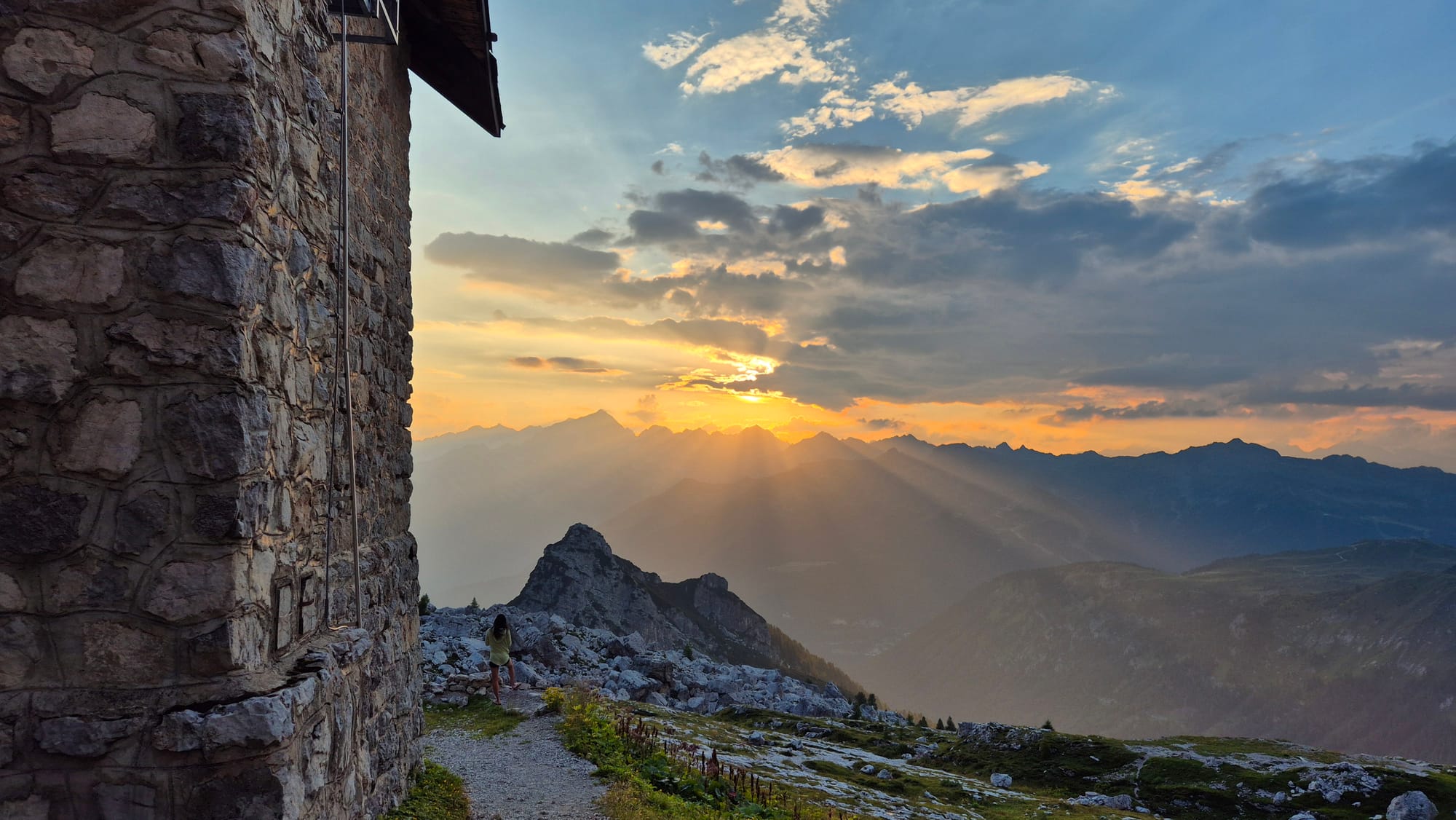
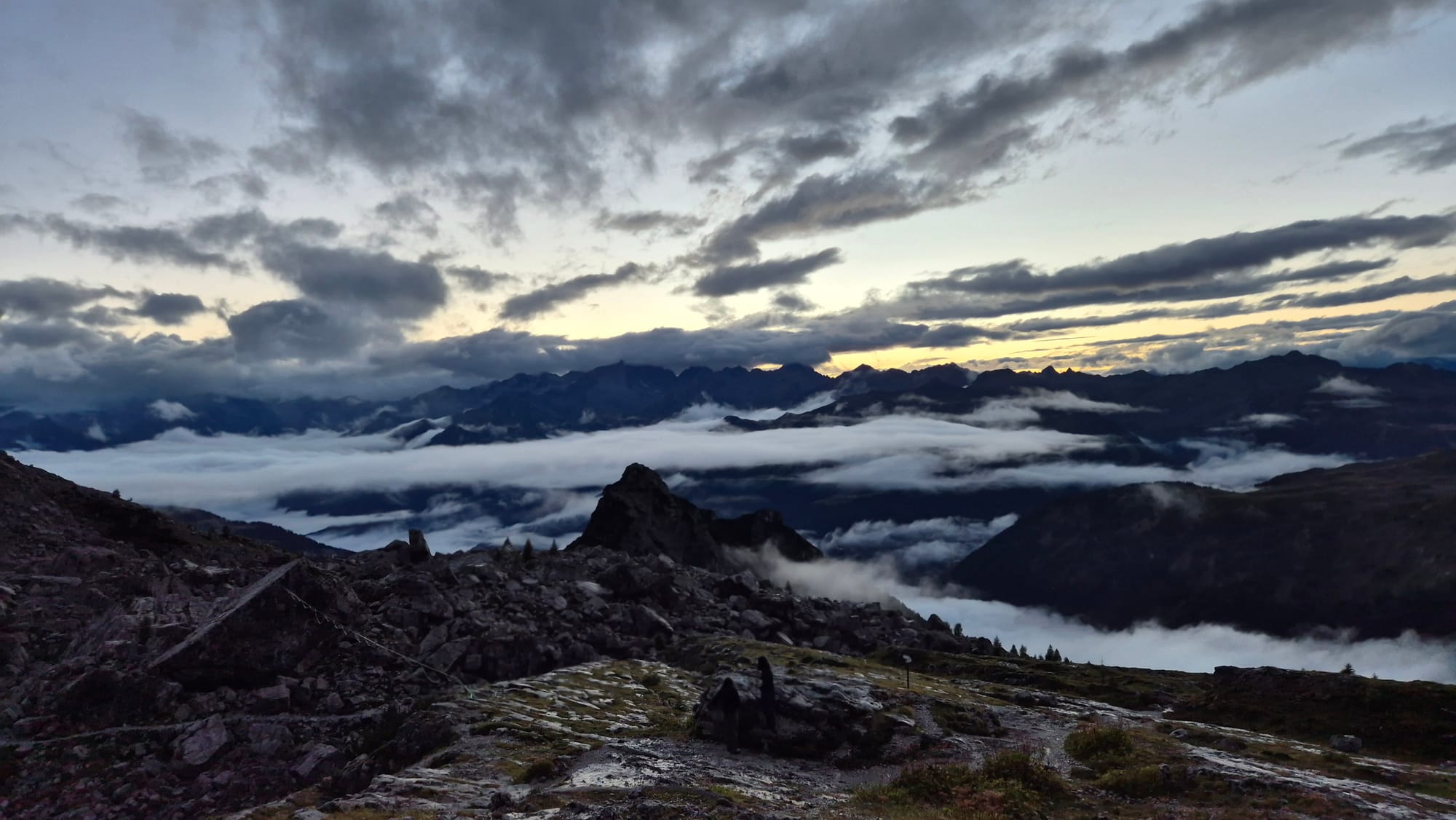
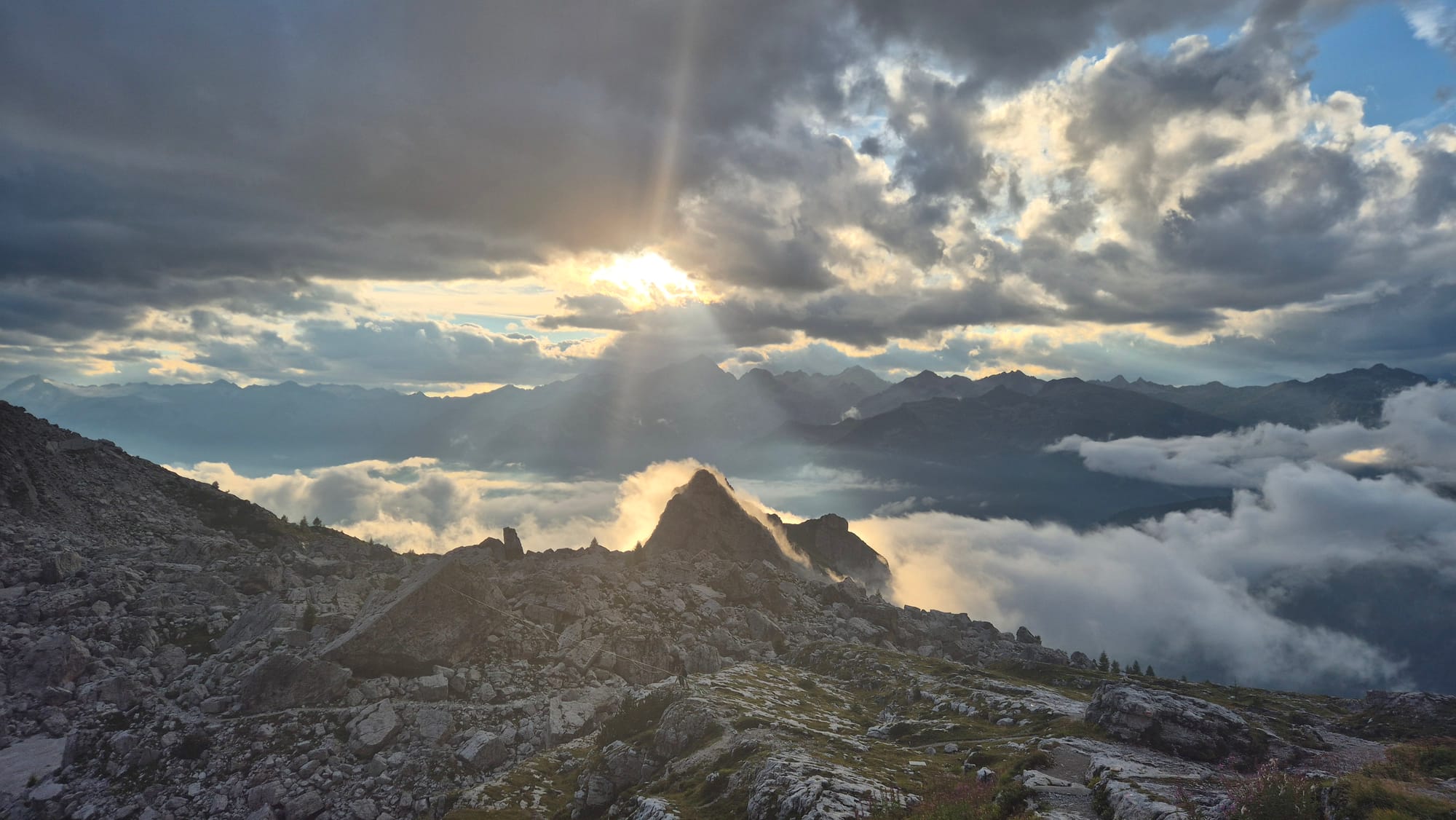
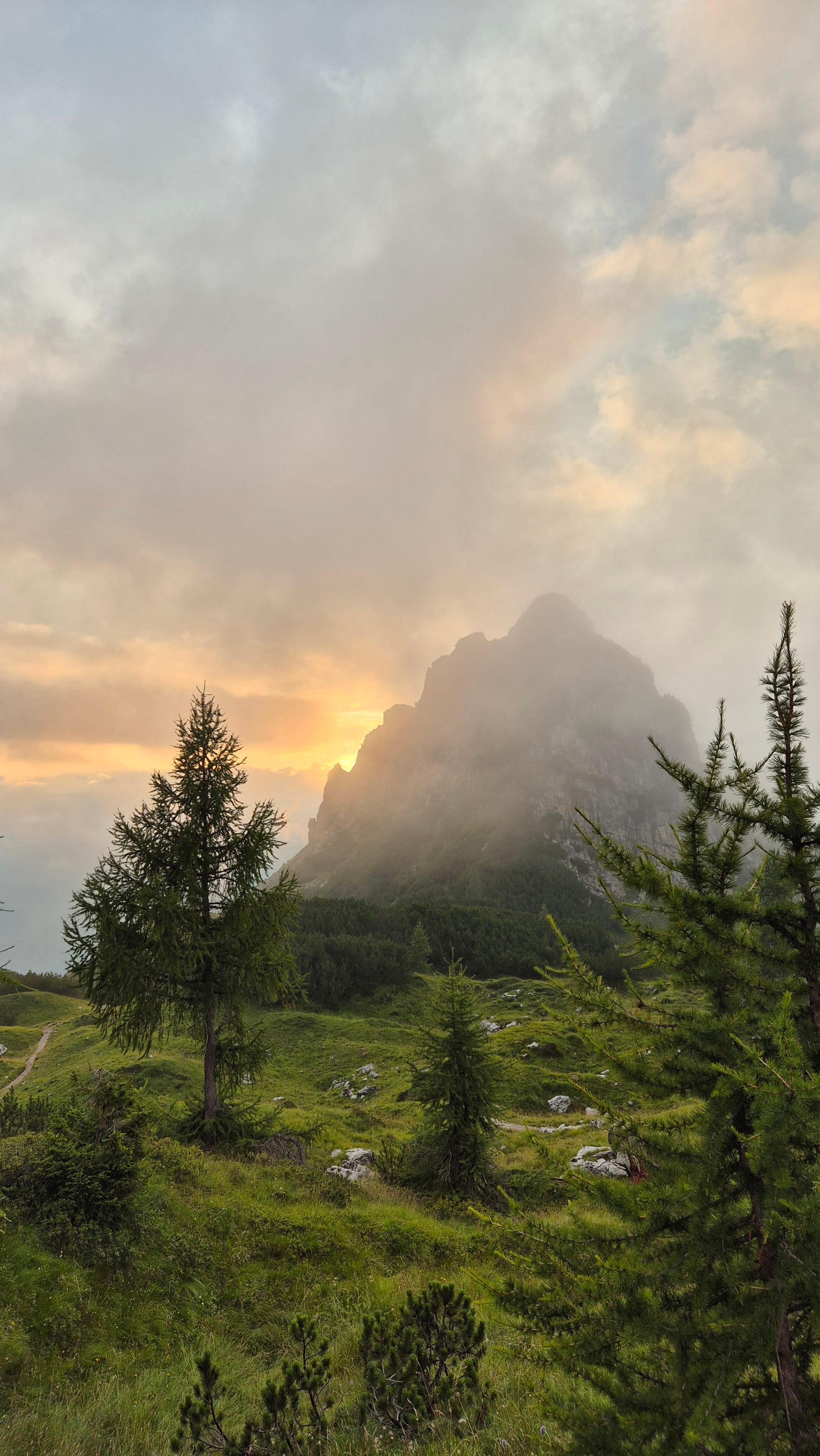
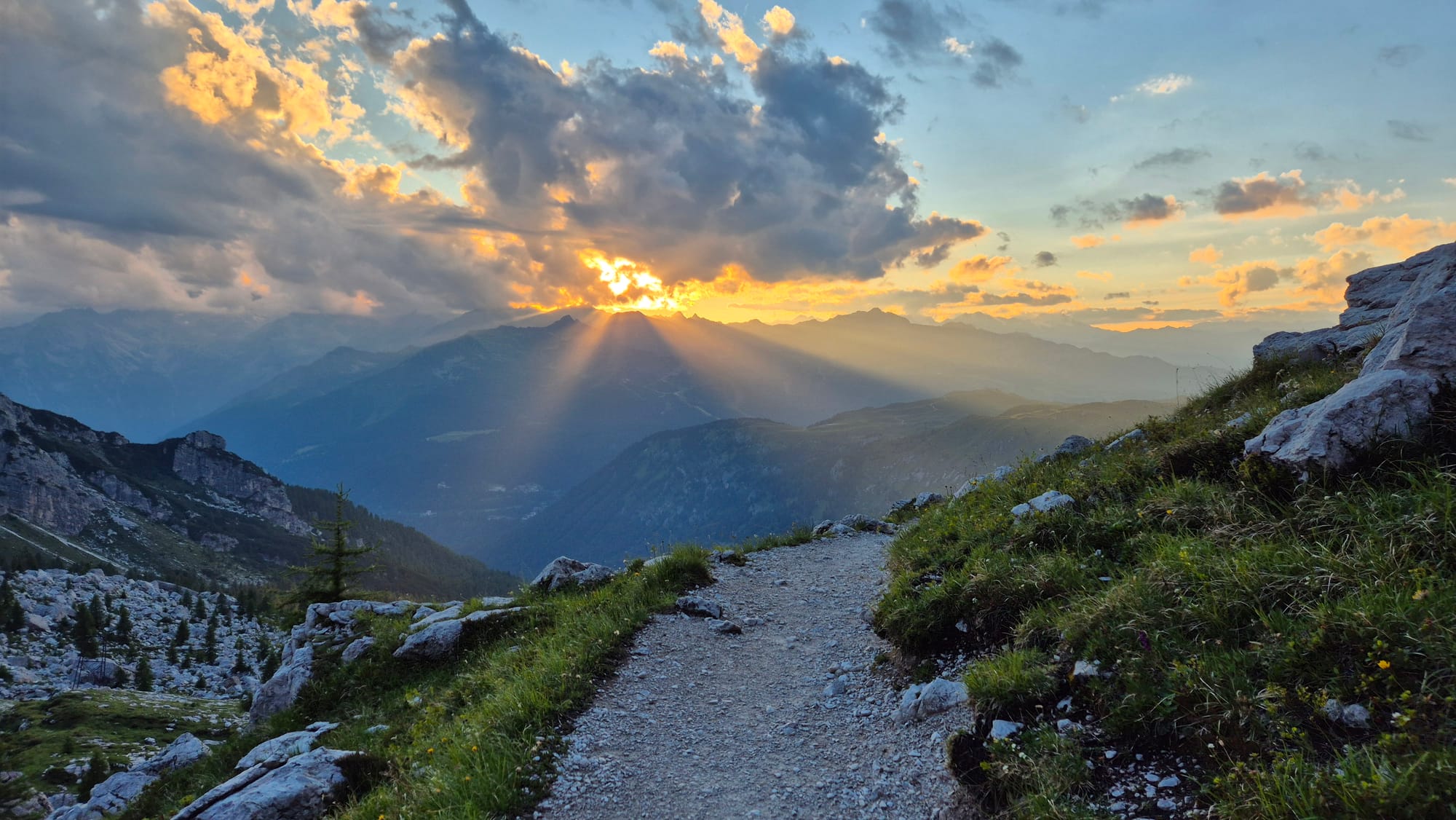
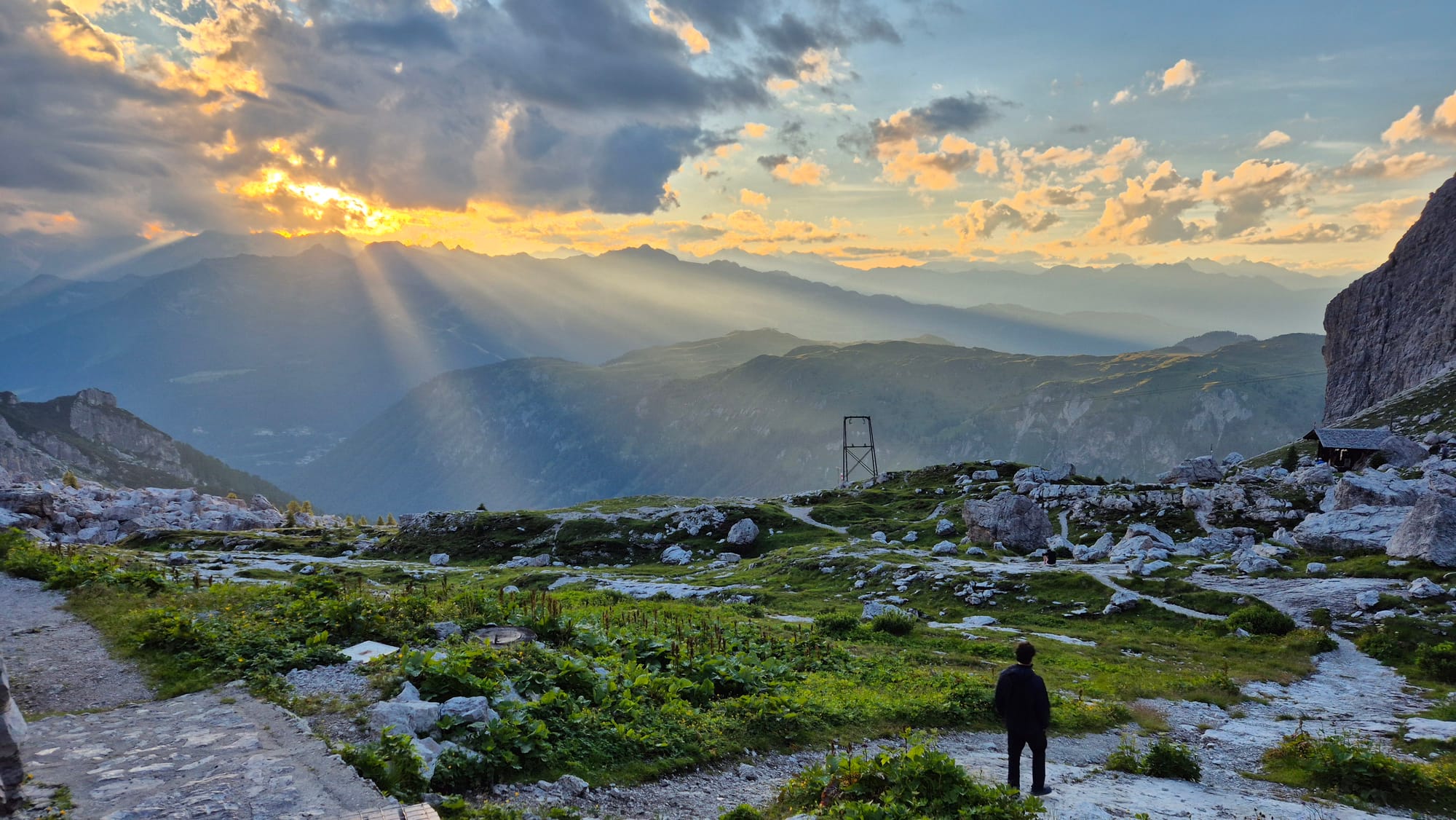
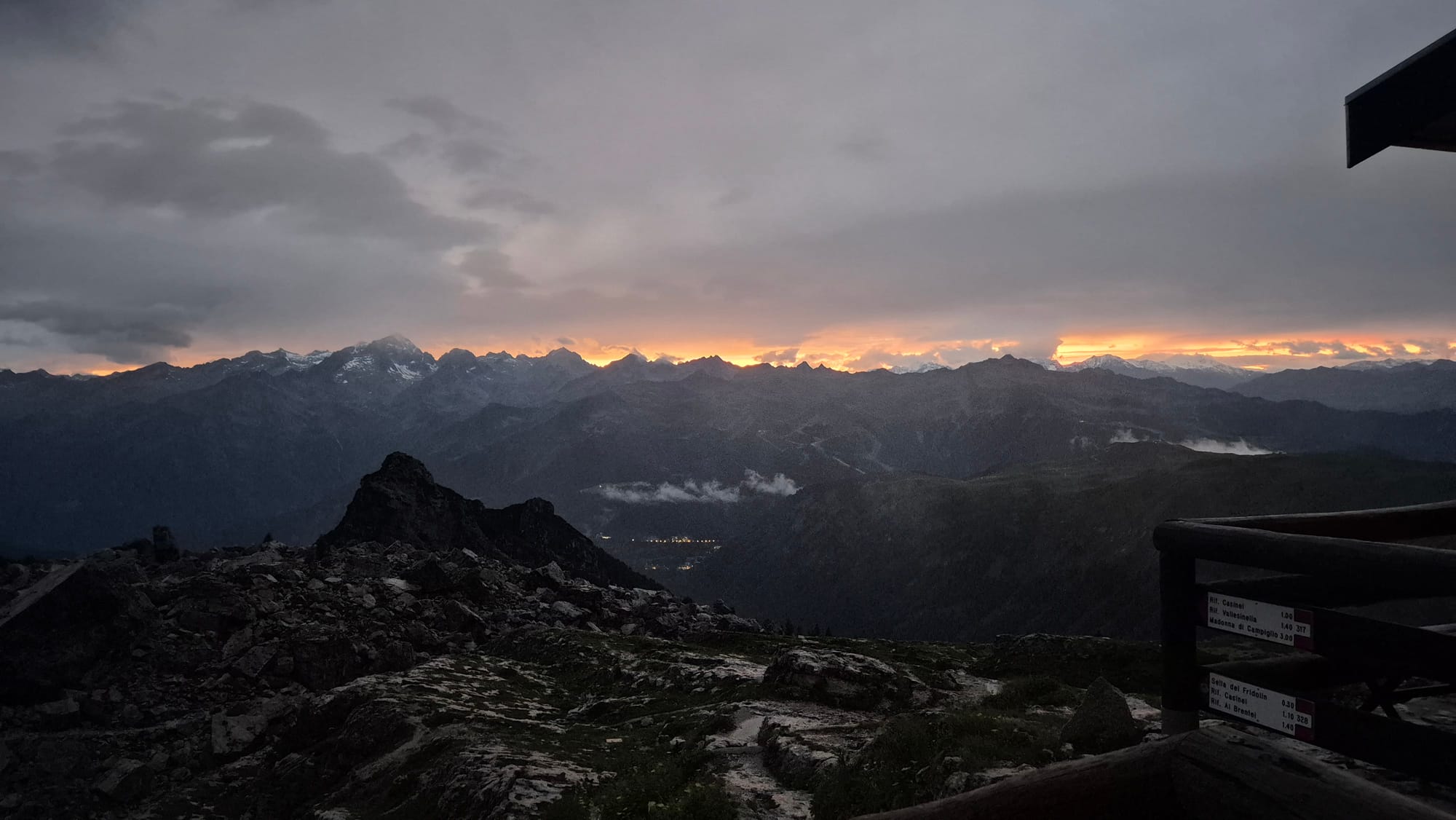
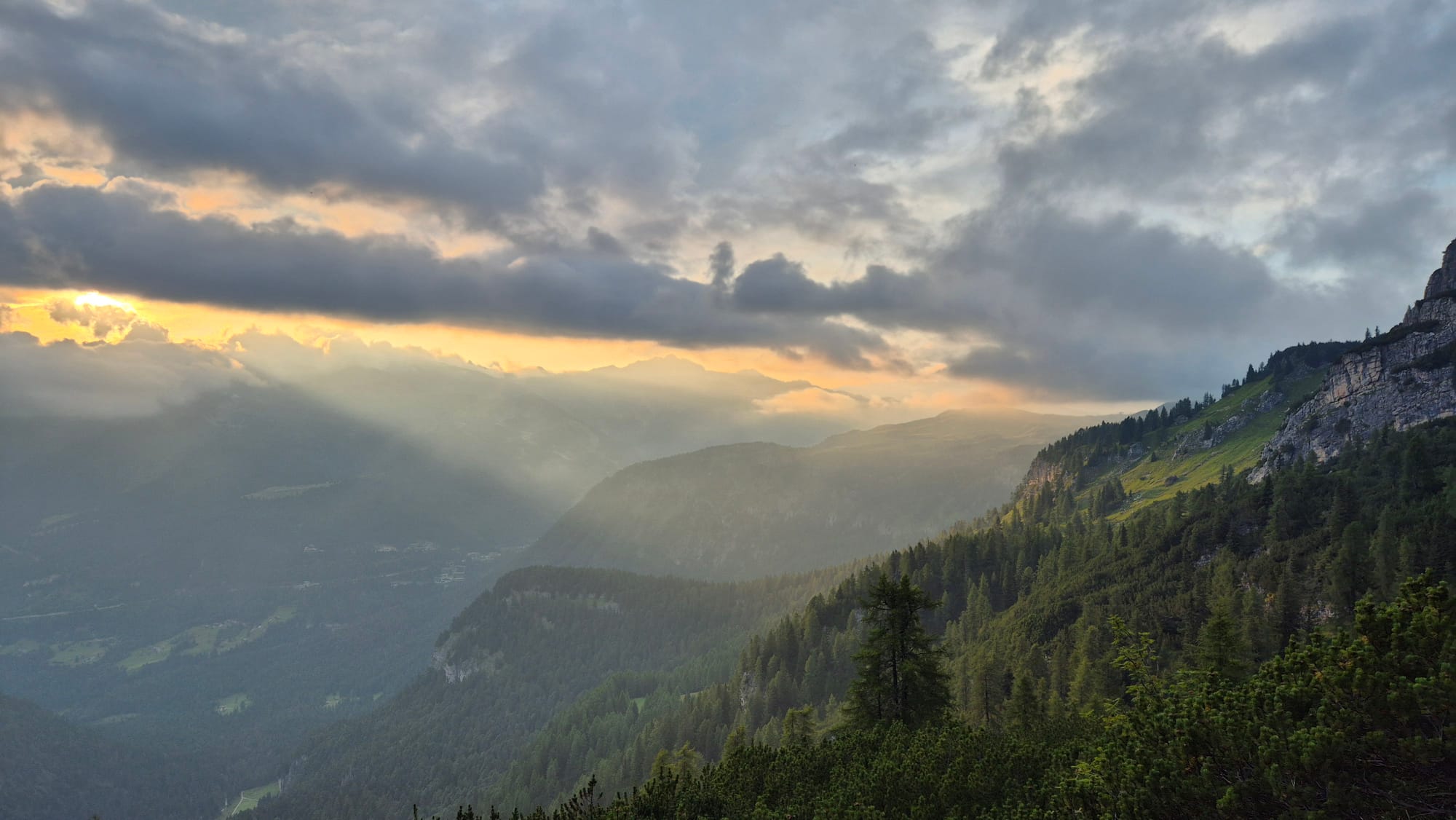
It's amazing that a hut tucked inside a gigantic amphitheatre of dolomite rock can have such a view. Every sunset is different, usually fiery and stunning. Every evening you'll see crowds of foreign visitors standing there, full of wonder, staring at that endless landscape. Unless you're unlucky enough to get clouds. But that's just bad luck, what can you do. You'll come back.
And when it gets dark, if the sky is clear, look up. You won't see stars like that in a city.
The people who run it
Score: 10/10. But I'm biased, because we're friends.
They're legends. The Angeli family has run the hut for decades and, with just the right mix of madness and intelligence, they've looked after this little gem of the Alps. They truly care, and they want it to stay a mountain hut. Travel around the Alps and you'll find places that have turned into hotels.
Not here. Here it's a hut. Dinner is early: between 6 and 7 pm. Full stop. Want to eat at 9? Wrong place. Want a single room? Wrong place.
Want to see a starry sky and have a genuine, unpretentious conversation? Right place. You'll find smiles and a warm welcome. Except at lunchtime, when everyone is working flat out, because overtourism is very real (only at lunch).
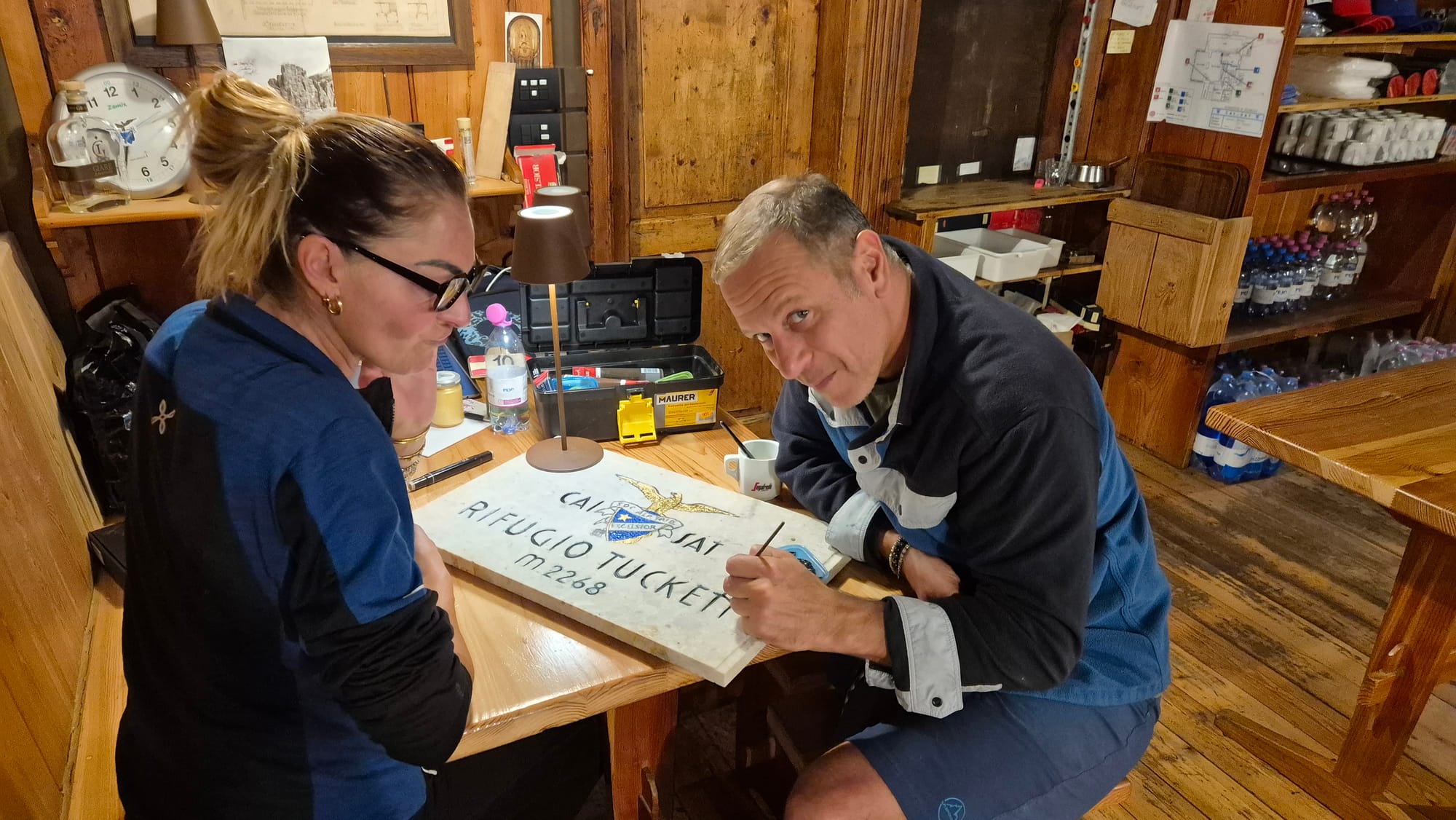
The two people in charge are Alberto and Giulio. Giulio is the rock 'n' roll soul of the place and also its living memory: over the years he's built up a whole web of friendships. People come to the Tuckett for the scenery and the climbing. And they come back to renew rituals of friendship.
Alberto is the keeper of the hut. And he really does keep it: he protects its soul, and at the same time he lives to make it an ever better place.
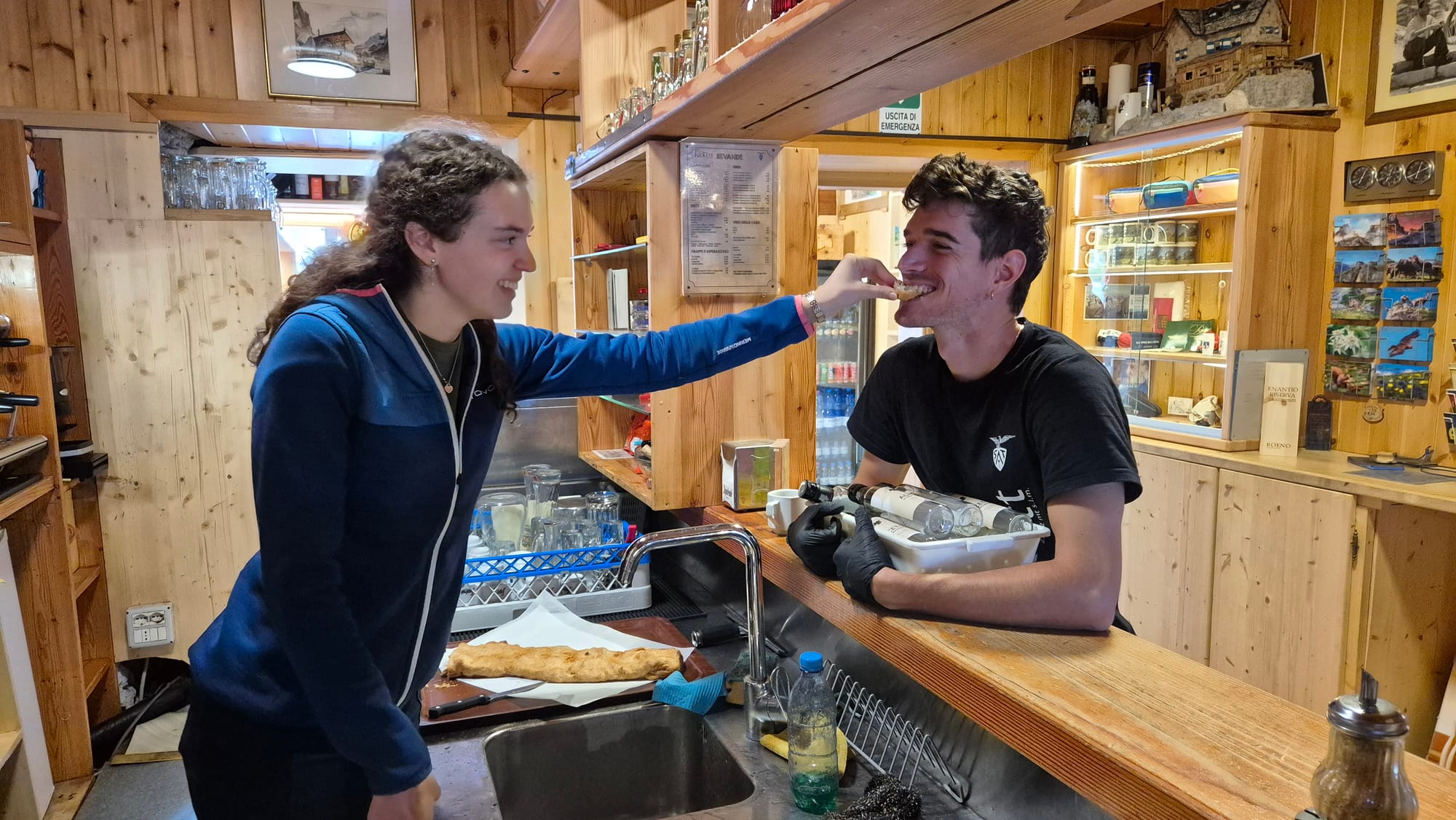
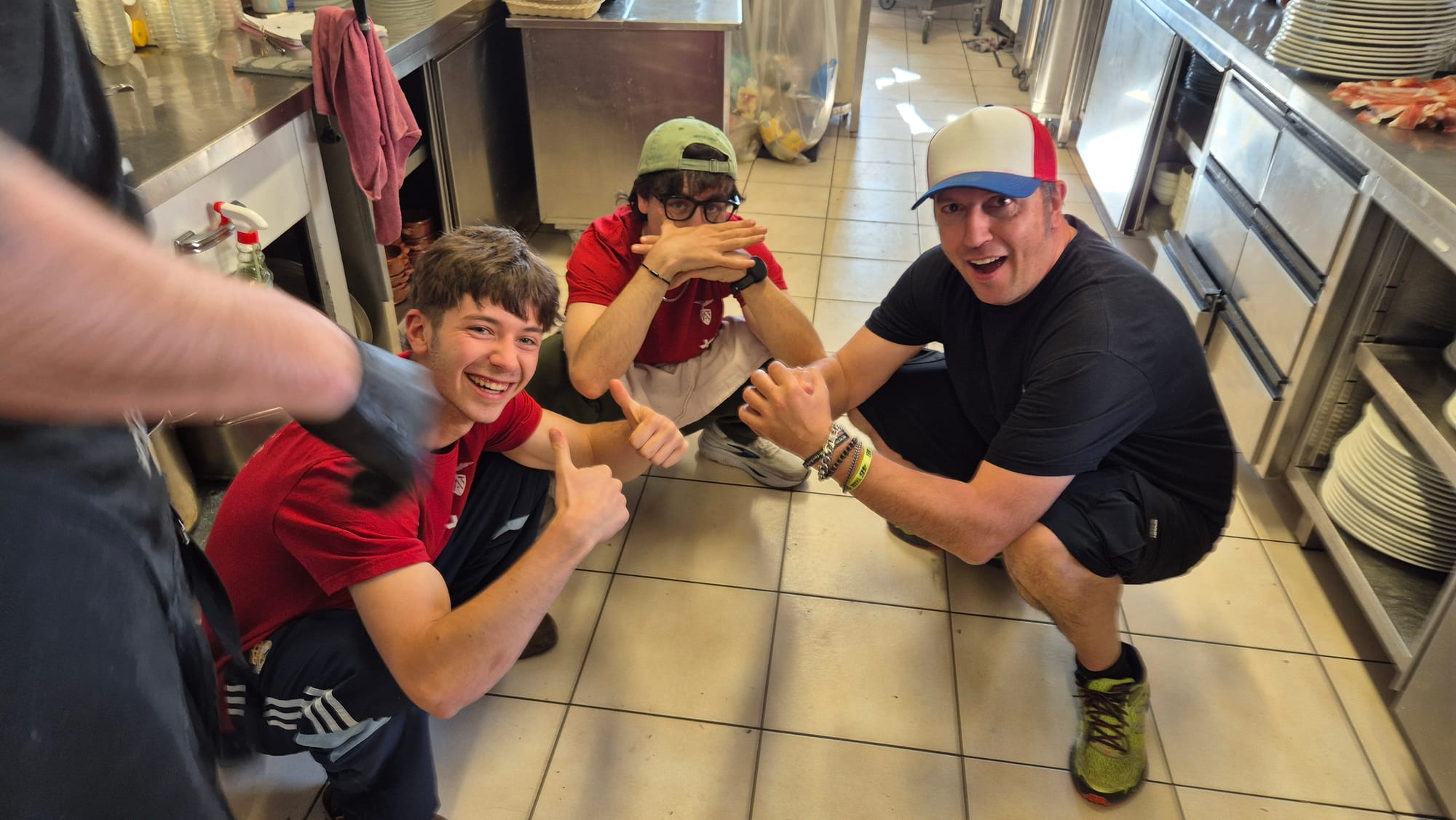
Come with the right spirit and a genuine curiosity about the hut, its history and the land around it, and you'll find the doors wide open.
Stay safe
- Emergency number: 112 (or 118 for medical emergencies).
- Weather: summer afternoons often bring thunderstorms. Start early and check the forecast, especially on a via ferrata.
- Insurance: make sure your travel insurance covers hiking and mountain rescue. In Italy a helicopter rescue for someone who isn't injured can be billed, and it isn't cheap. If you're a member of an alpine club, check what your membership covers and whether it gets you a discount in the huts.
The scorecard
- Routes: 9/10
- Getting there: 6/10
- Food: 9/10
- Building: 9/10
- Views: 9/10
- The people who run it: 10/10 (biased, I admit it)
So: walk up, stay the night, have dinner at six and watch the sunset. Then tell me I was wrong.